Shaldon Festival 2026
Click on name below for photos and reviews.
Kosta Popović & Sofia Sacco
Trio Bohémo
Lizzie Ball & Miloš Milivojević
Review of Kosta Popović & Sofia Sacco – Wed 17 June
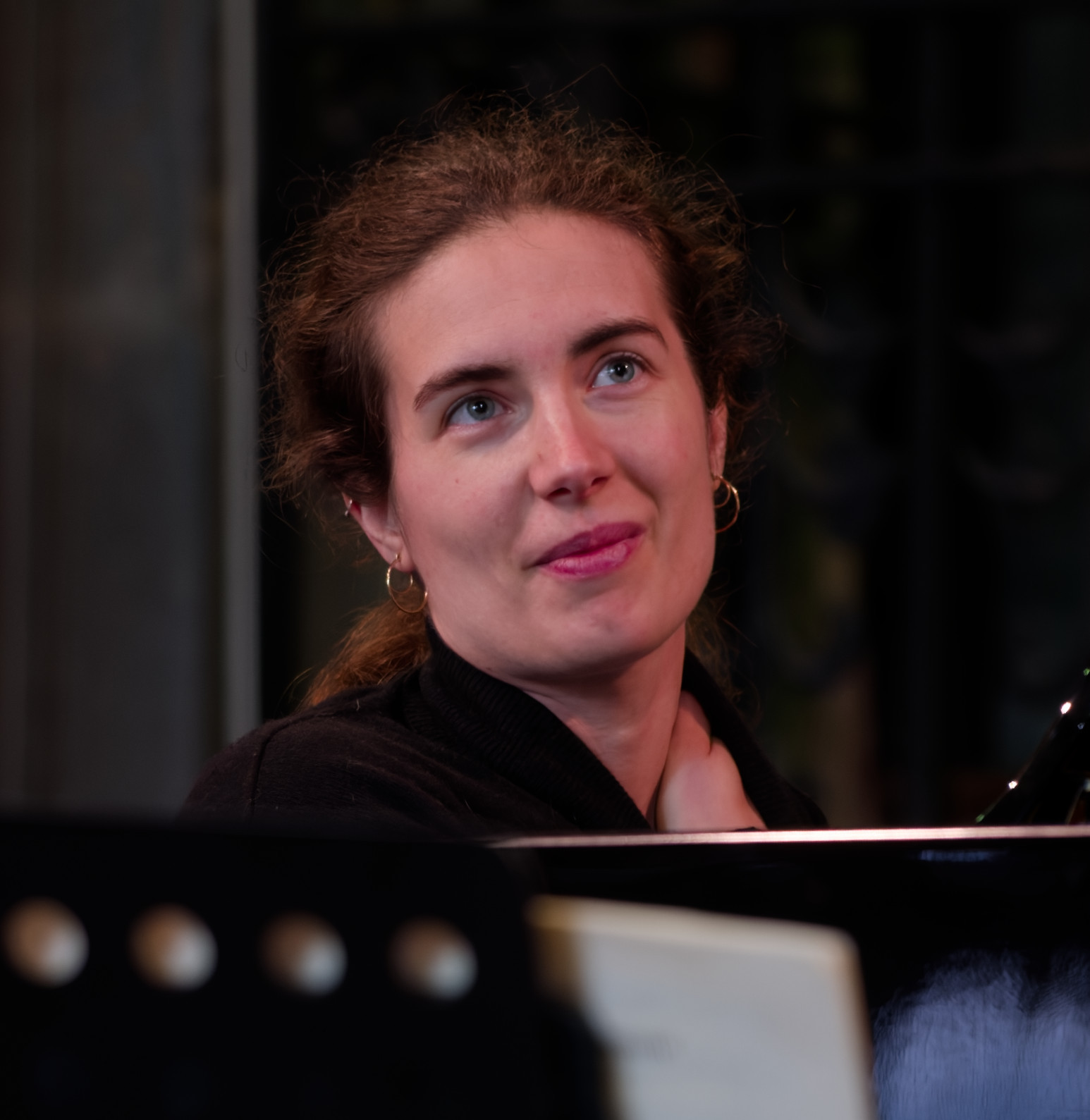
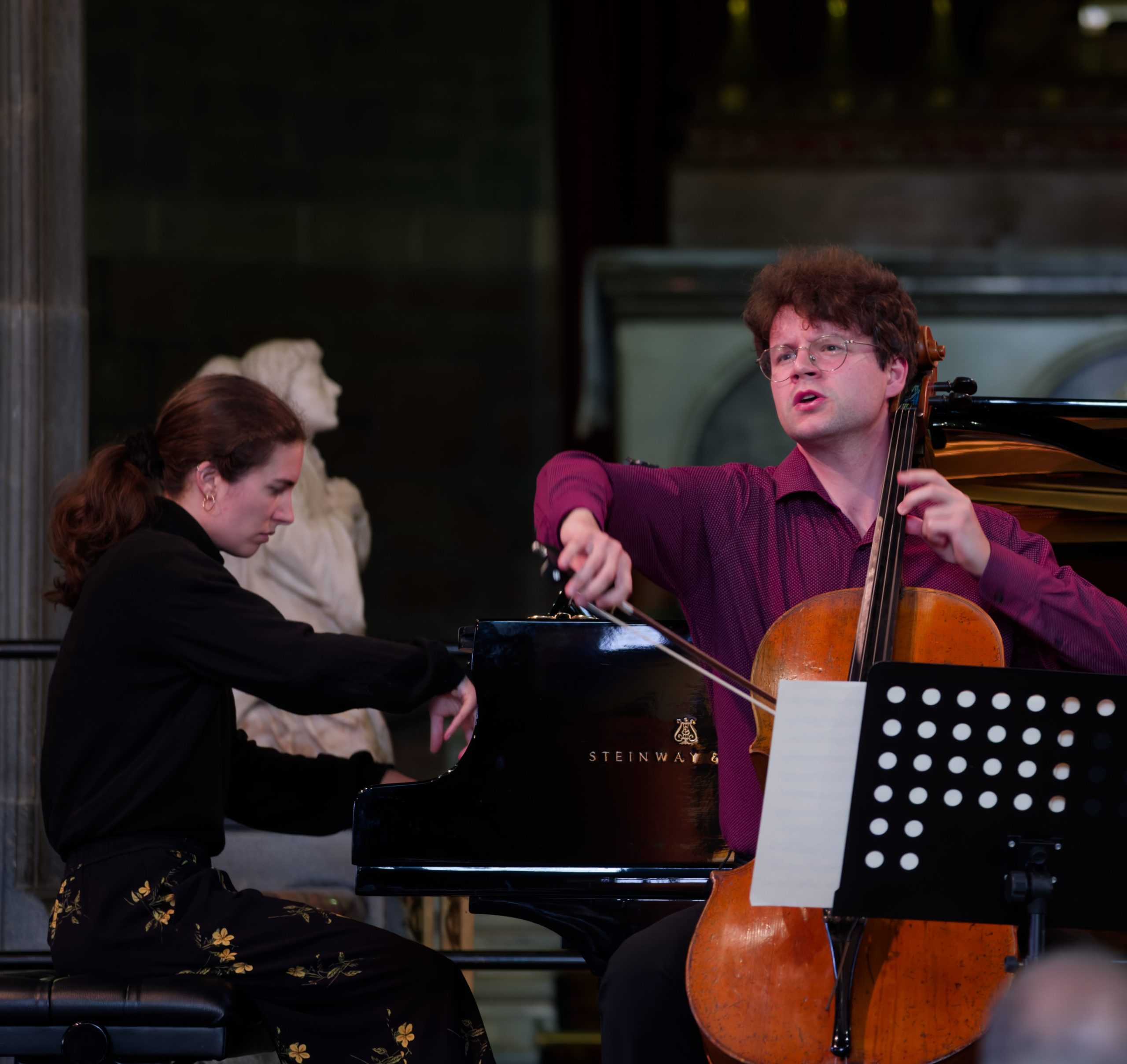
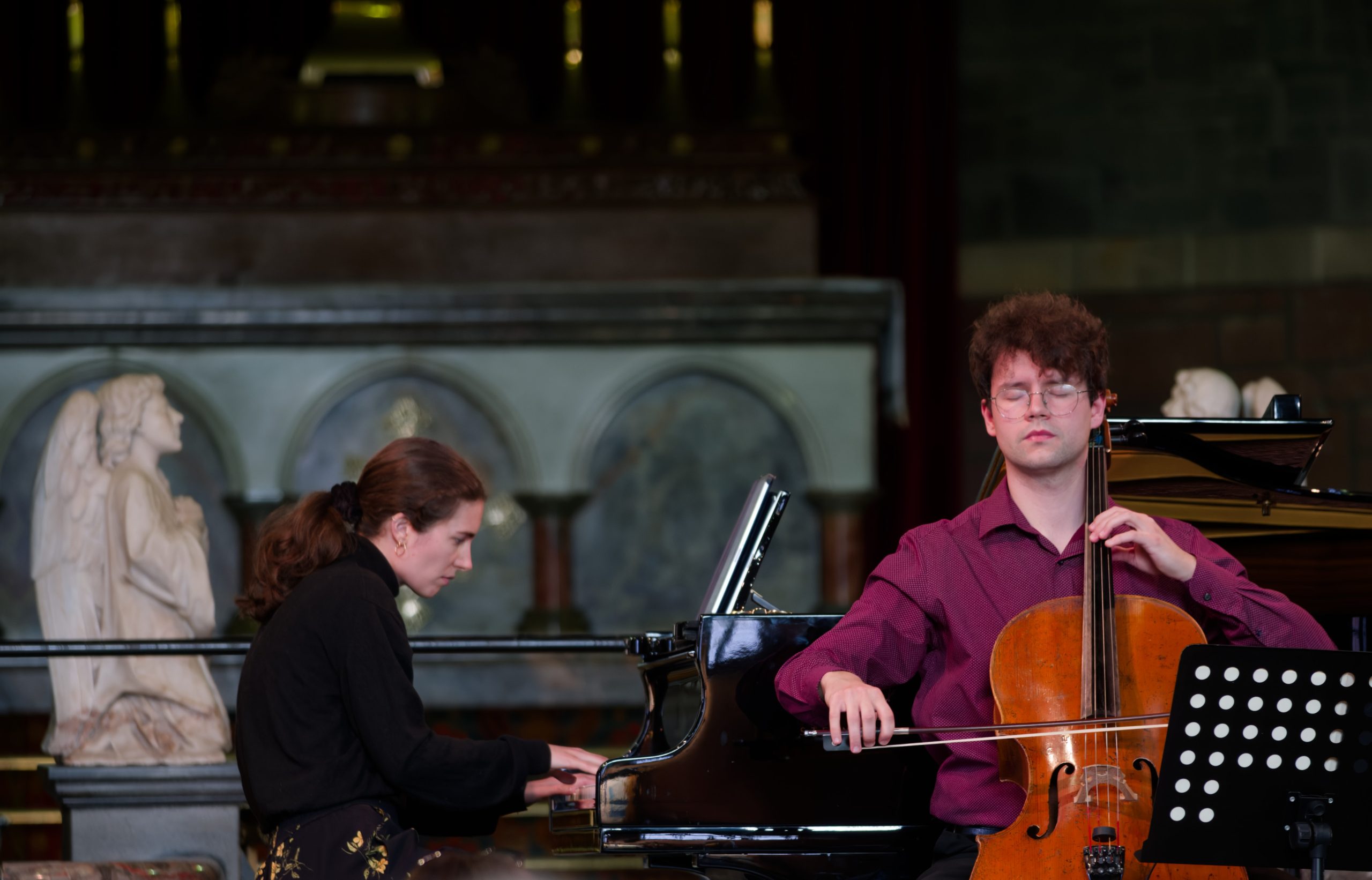
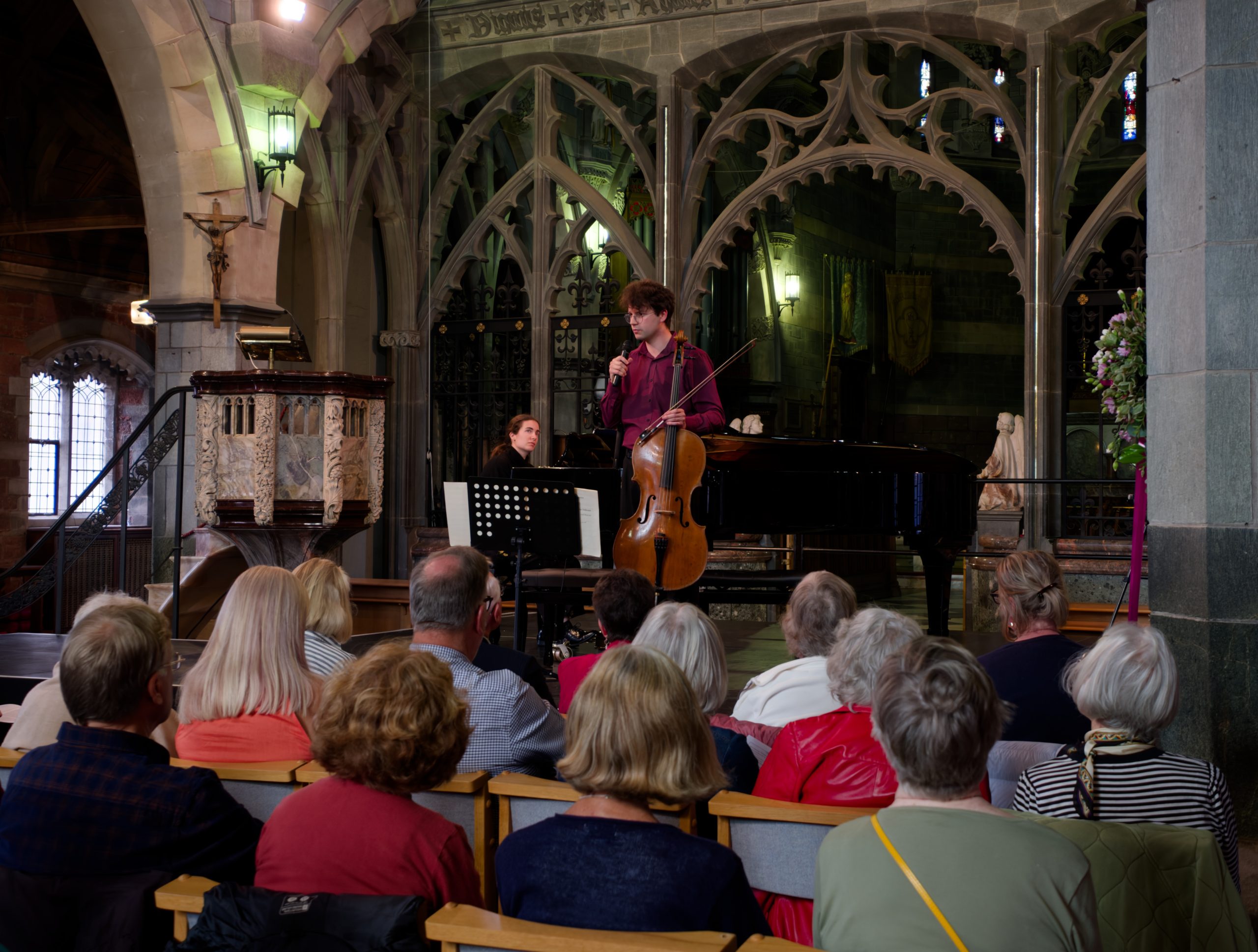
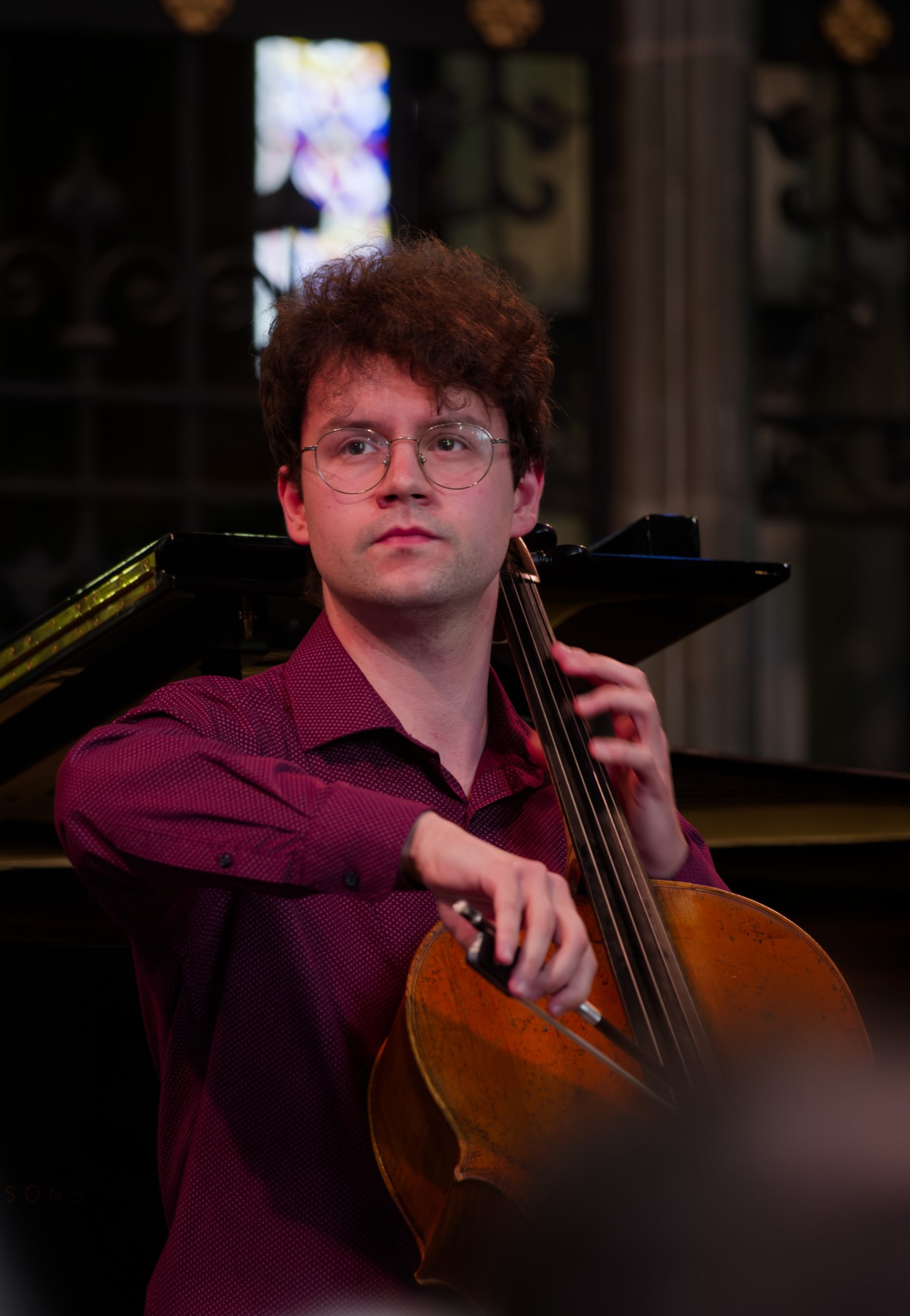
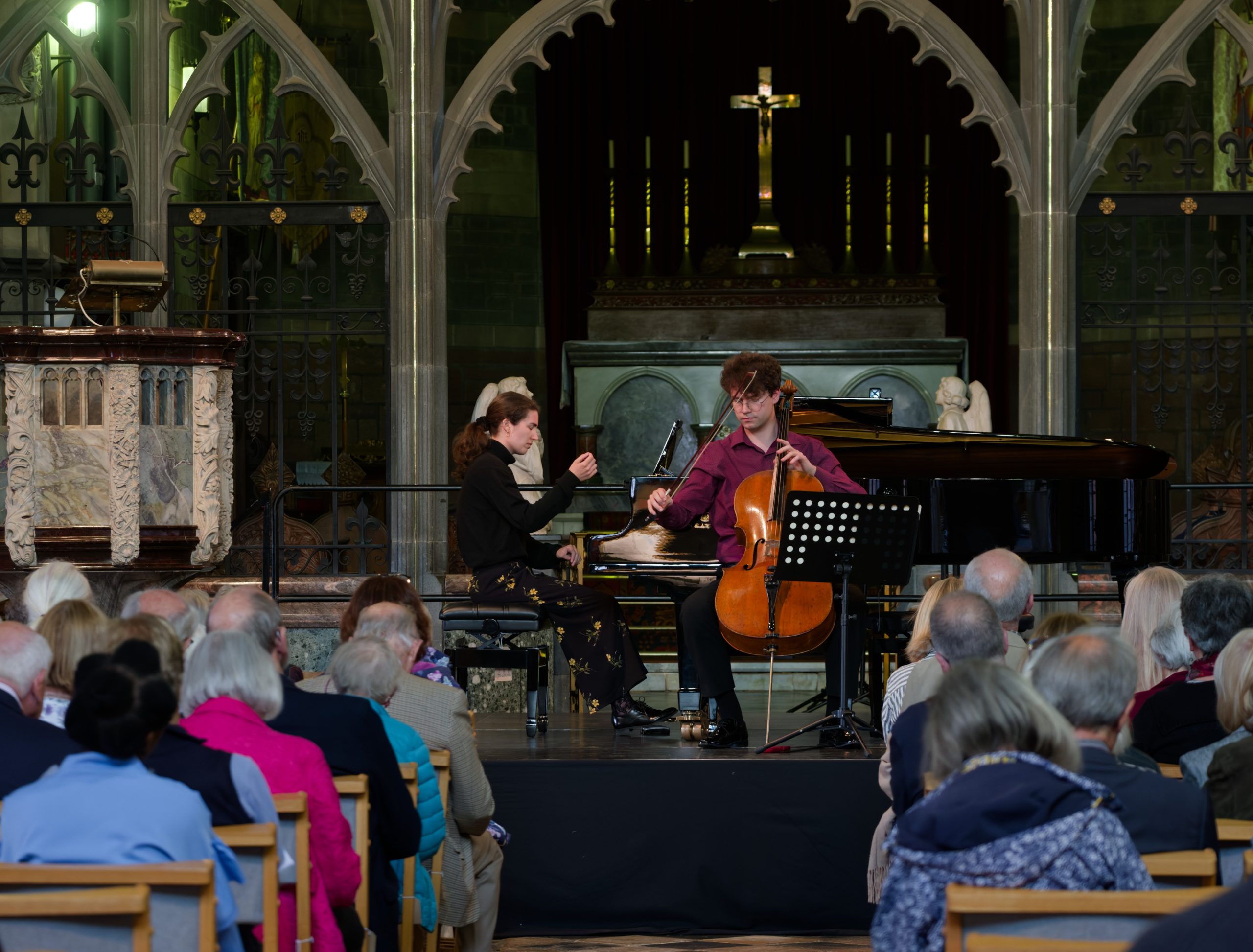
On 17th June an enthusiastic audience at the opening concert of this years’ festival was treated to a sublime evening of five star music-making from Montenegrin cellist Kosta Popovic and his Italian accompanist Sofia Sacco.
The concert opened with five Pieces in Folk style by Robert Schumann, each movement showing the versatility of the cello, our soloist played with real poise and demonstrated a virtuosic technique in the very contrasting movements.
Next followed the Debussy Sonata, in which we were transfixed by the playing of both performers, Kosta again demonstrating his mastery of the instrument with a range of playing techniques that really show off the versatility of the cello.
The final piece in the first half was an arrangement – Suite Italienne by Stravinsky. This collection of pieces in true neo-classical style explored themes from baroque music with a twentieth century twist. Communication between the soloist and accompanist was seamless, Sofia playing the role of accompanist with great understanding and musicality.
The second half of the programme was much more of an equal partnership between cello and piano in the great nineteenth century works, variations for cello and piano by Beethoven and the Chopin sonata for cello and piano. Both works allowed the performers to once again demonstrate their versatility, ranging from intricate semiquaver passages in the Presto and scherzo movements to the more lyrical lines in the slow movement of the Chopin.
The finale brought the evening to an exciting finish with some musical fireworks from both Costa and Sofia. These fine young players brought real passion and flair to the opening concert of this years’ festival.
Tim Crompton
Review of Trio Bohémo – Thu 18 June
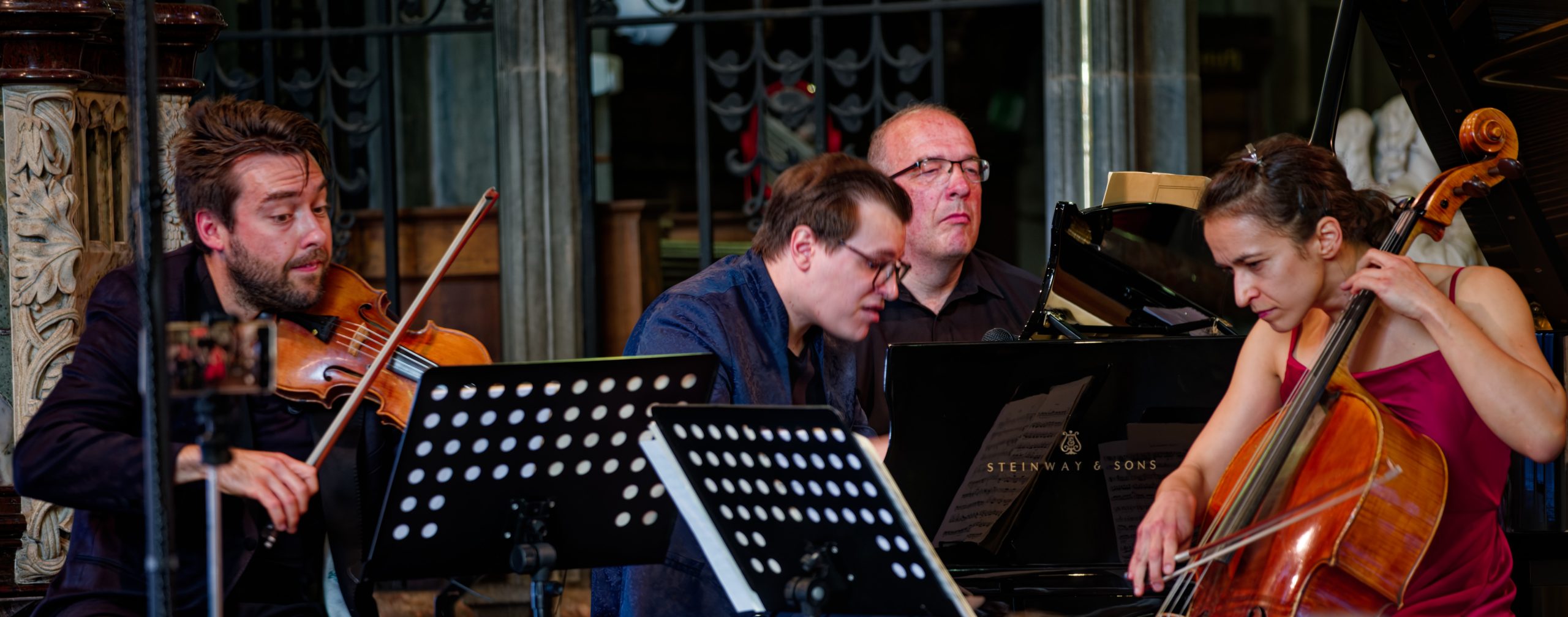
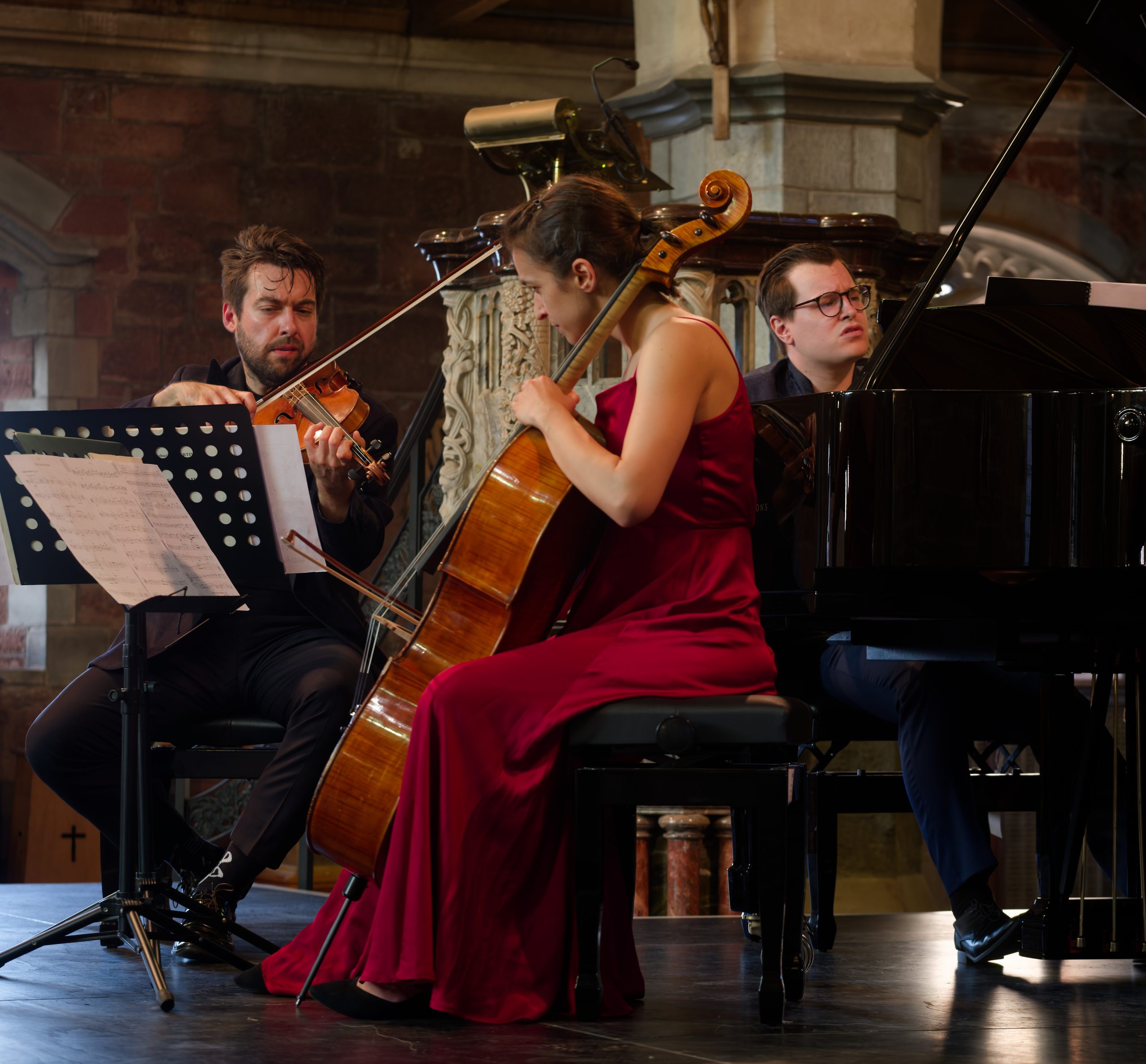
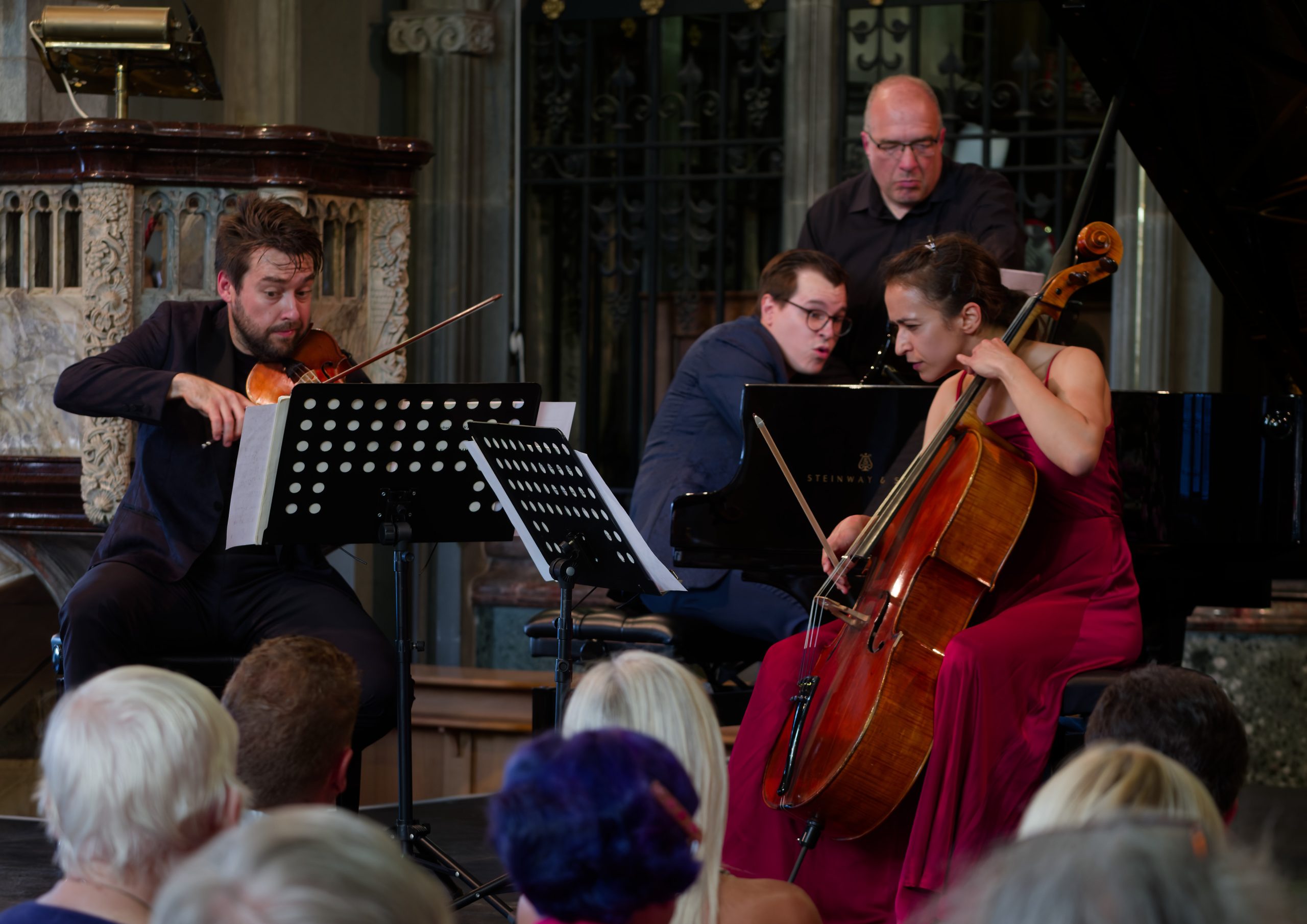
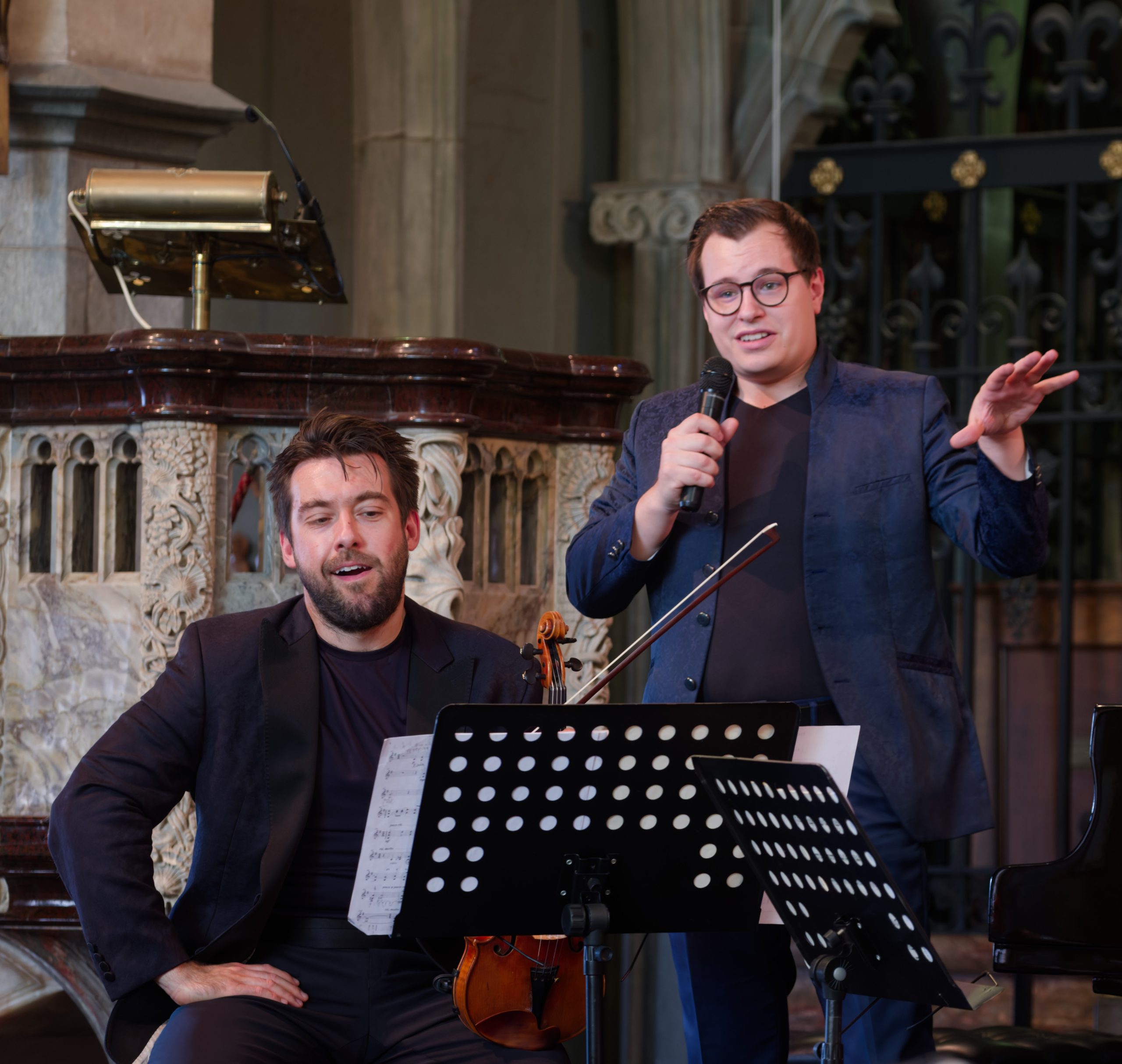
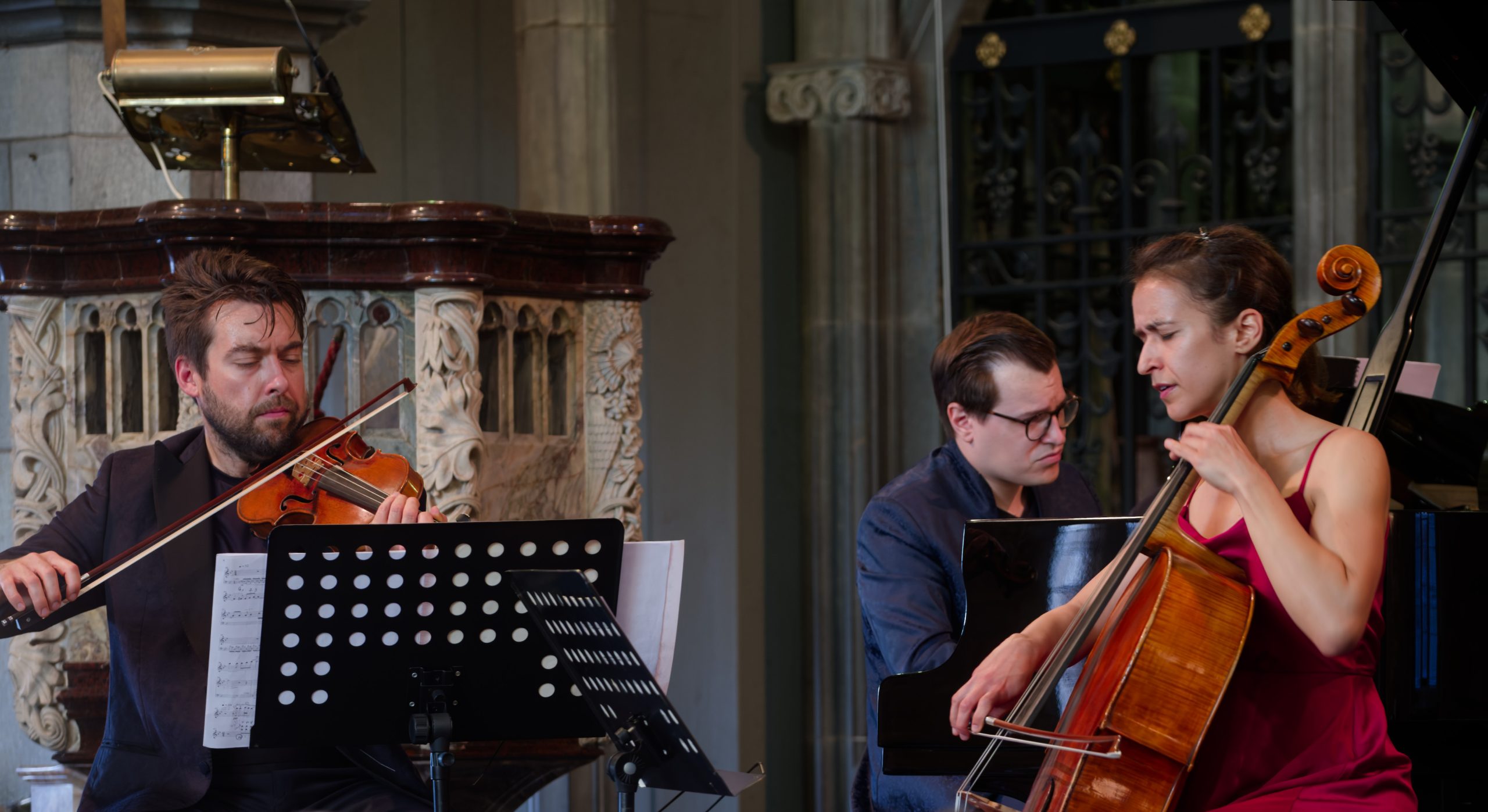
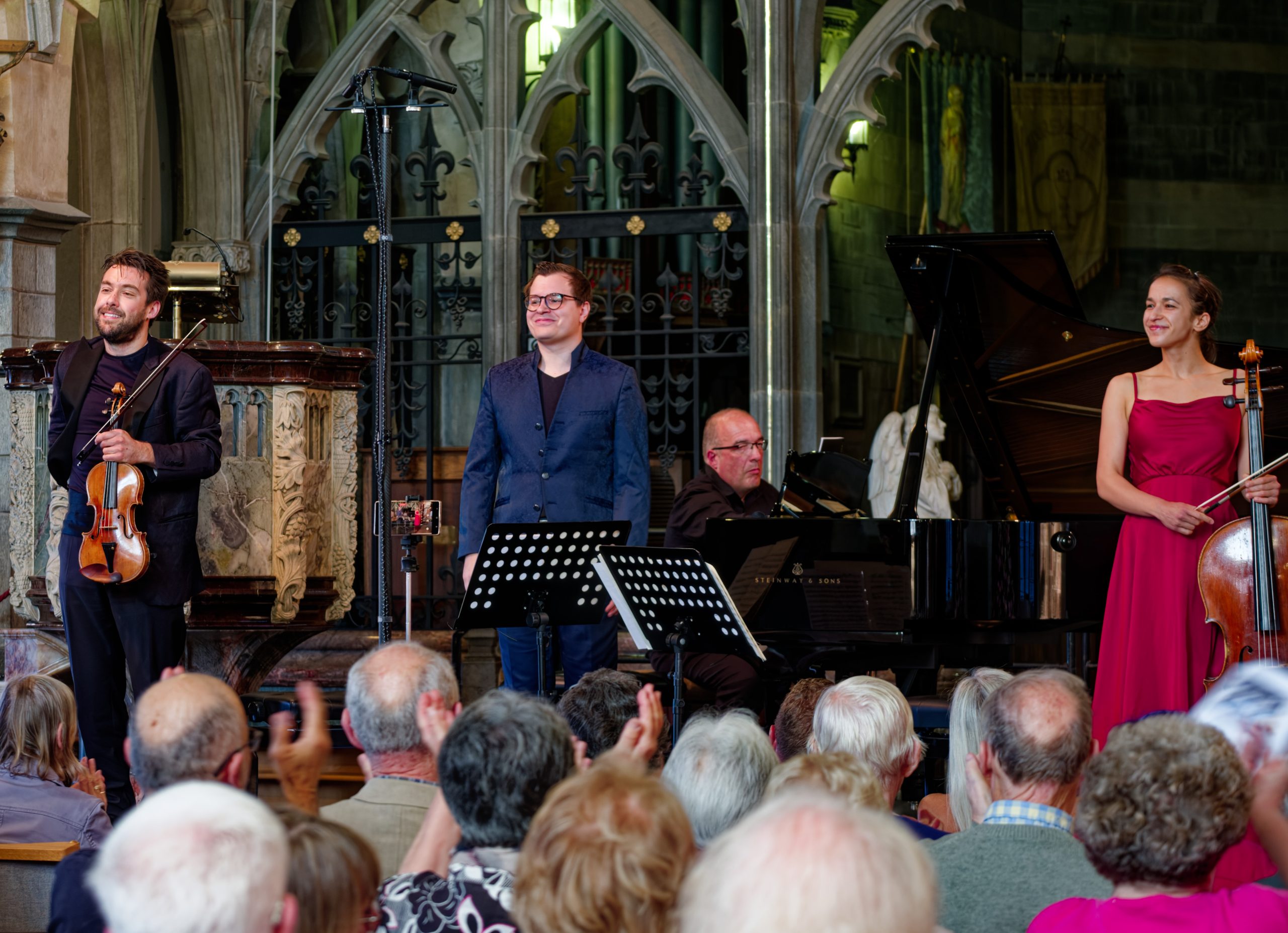
It was a great pleasure to welcome Trio Bohémo back to the Shaldon Festival of Music this year, after their successful concert during our 2023 festival. Having travelled from Prague earlier in the week, they were guests on BBC Radio 3’s “In Tune” programme the evening before our concert and they travelled down to Devon after their appearance.
Their arrival on stage was greeted enthusiastically by our audience and they began their programme with Bohuslav Martinů’s Piano Trio No. 2 in D minor, number 327 in Halbreich’s 1968 catalogue. The opening allegro moderato features dense string writing, reminiscent of Brahms, and a classical-style development. This was taxing for the string players, especially the violinist, Matouš Pěruška. The slow middle movement has a modern, chromatic folksy melody and this is where we hear the bell-like piano chorale, beautifully portrayed by Jan Vojtek. The final allegro is a rapid, high-energy movement that functions as a virtuosic tour-de-force, balancing technical brilliance with an undercurrent of emotional anxiety.
The trio is regarded as a key contribution to the modern piano trio repertoire, highlighting Martinů’s skill in balancing complexity and sonority.
Before playing the next piece, Piano Trio No. 2 “From Jewish Traditions”, by the Tajikistani composer Benjamin Yusupov, members of the trio took some time to introduce it to the audience by describing the origins of the work and discussing and introducing some of the techniques they had to adopt to play the work. This enabled the audience to appreciate the work much more fully and several comments from audience members reinforced this. It transpires that the Shaldon Festival was the first UK venue to agree to the Trio performing this work!
The central movement required Jan Vojtek, the pianist, to produce some strange sonorities on the piano, achieved by laying a string of metallic beads inside the piano, covering some of the middle-register strings.
Mendelssohn’s Piano Trio No. 1 in D minor, Op. 49, stands as one of the crowning achievements of early Romantic chamber music, admired for its seamless fusion of lyrical grace and structural clarity. From the opening bars, the piano introduces a restless, flowing figure over which the cello, played by Kristina Vocetková,
sings a long-breathed, ardent melody—an immediately captivating dialogue that sets the tone for the entire work.
The second movement offers a gentle contrast: a song without words, intimate and tender, where Mendelssohn’s gift for melody unfolds with disarming simplicity. This is followed by a light, scherzo-like movement, fleet-footed and shimmering, recalling the fairy-like textures familiar from his incidental music to A Midsummer Night’s Dream.
The finale bursts forth with urgency and brilliance, combining contrapuntal ingenuity with Romantic fervour. Its chorale-like second theme adds a noble dimension, driving the work toward a triumphant conclusion in D major.
Praised by contemporaries such as Schumann, who declared Mendelssohn “the Mozart of the nineteenth century,” this trio exemplifies the composer’s ability to balance emotional intensity with refined craftsmanship. It remains a cornerstone of the chamber repertoire, delighting audiences with its vitality, elegance, and expressive depth.
This fabulous group left us stunned by their virtuosity and communication skills and the extended applause was rewarded with a repeat of the Mendelssohn Scherzo.
This was a fabulous concert from a much-loved ensemble, whom we would be happy to welcome again.
Earlier in the day, the trio gave a workshop session to a group of 65 pupils from Years 5 and 6 at Our Lady and St Patrick’s primary school in Teignmouth. The pupils were transfixed by the trio’s playing and sat attentively throughout the session, responding very well to the trio’s questions. A very worthwhile outreach session for the festival.
Chris Morris
Review of London Tango Quintet – Fri 19 June
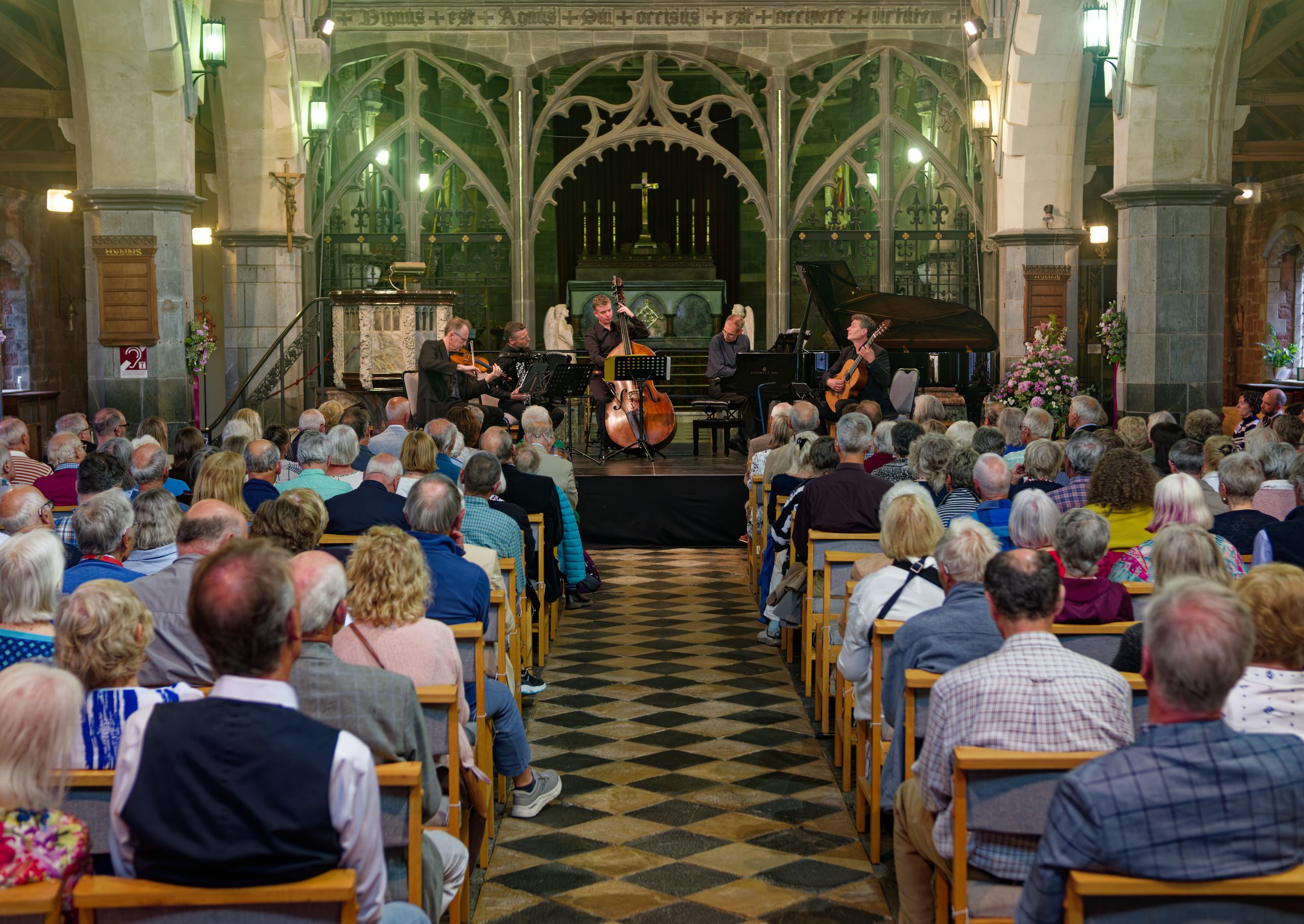
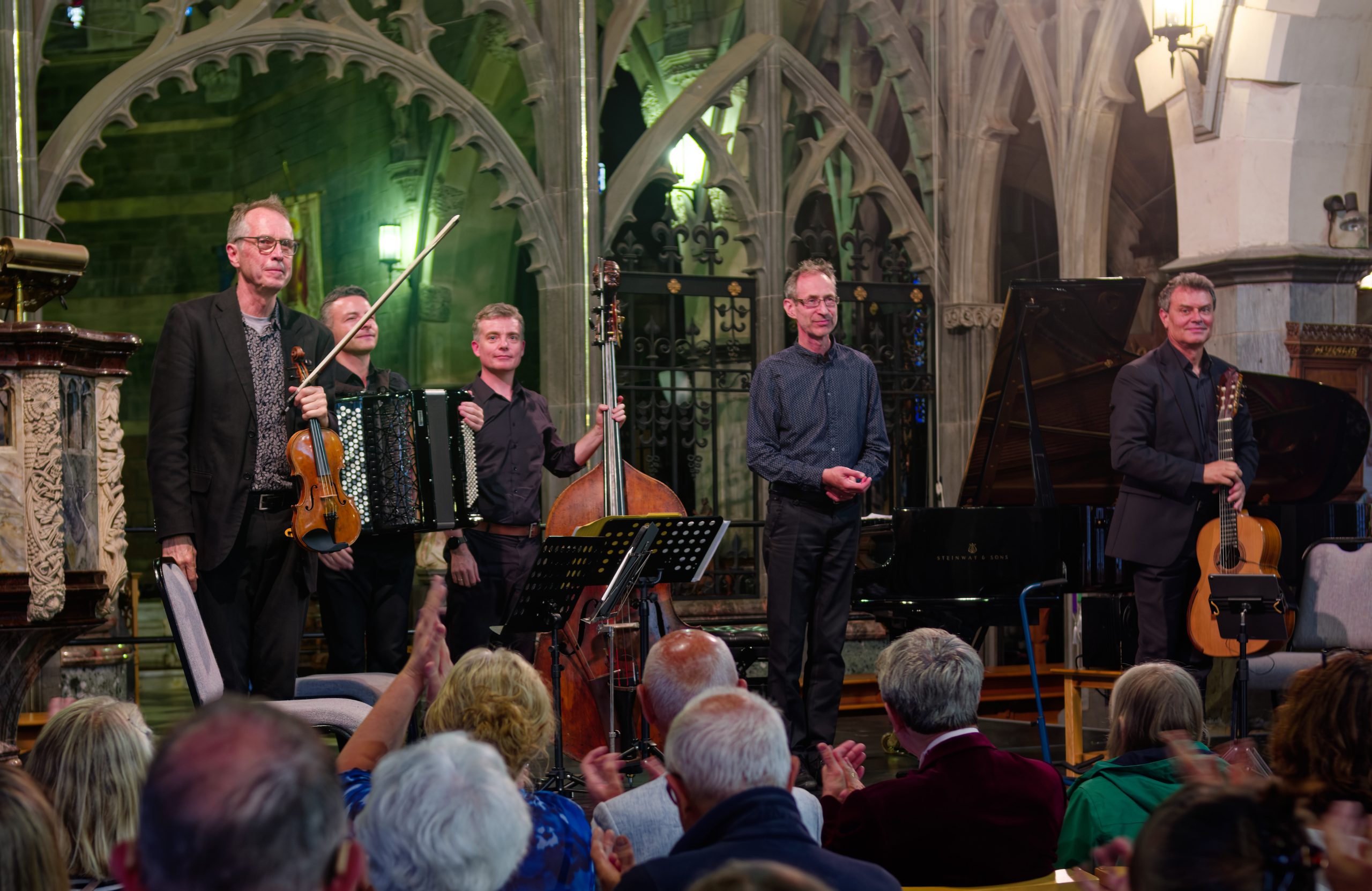
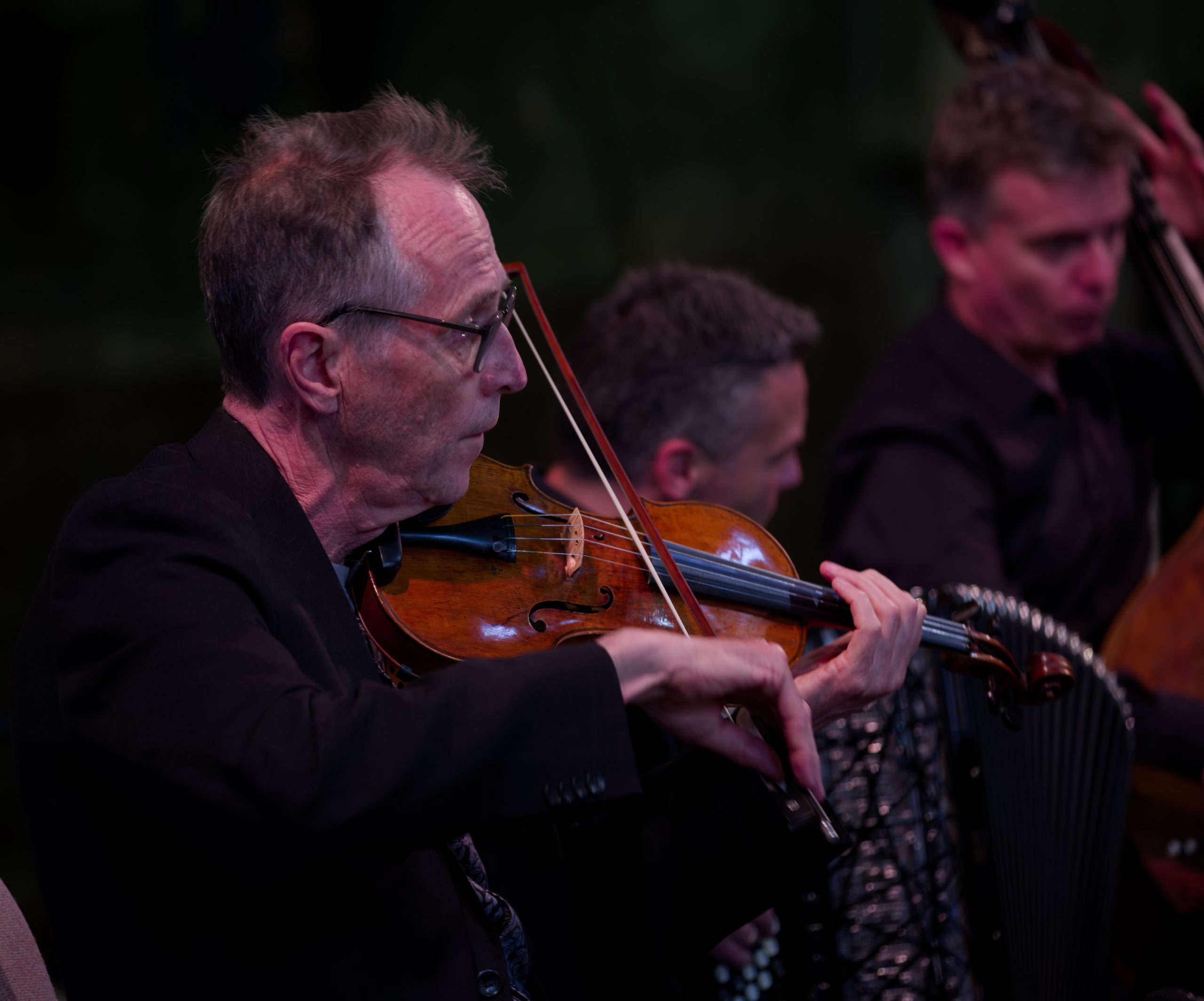
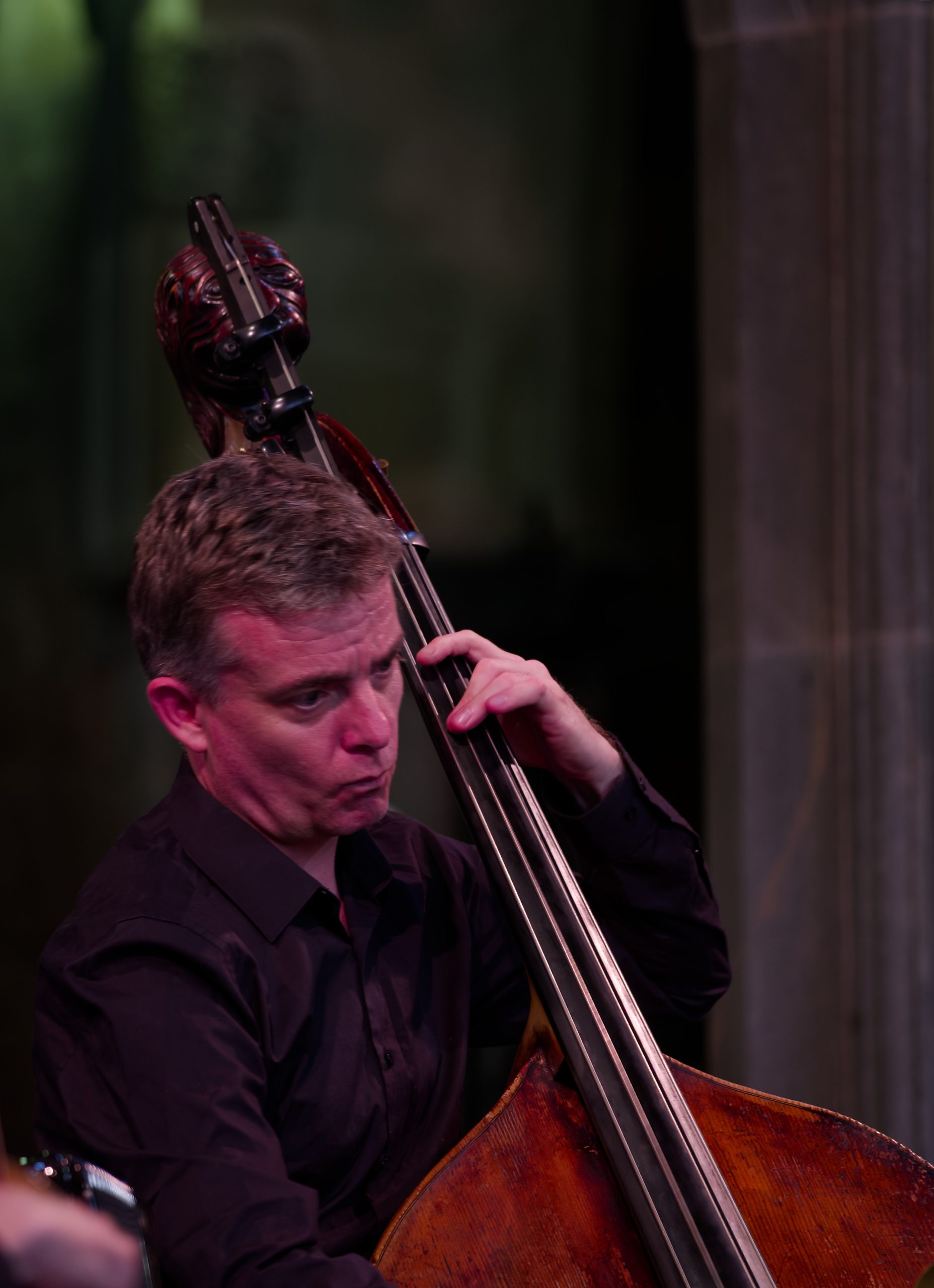
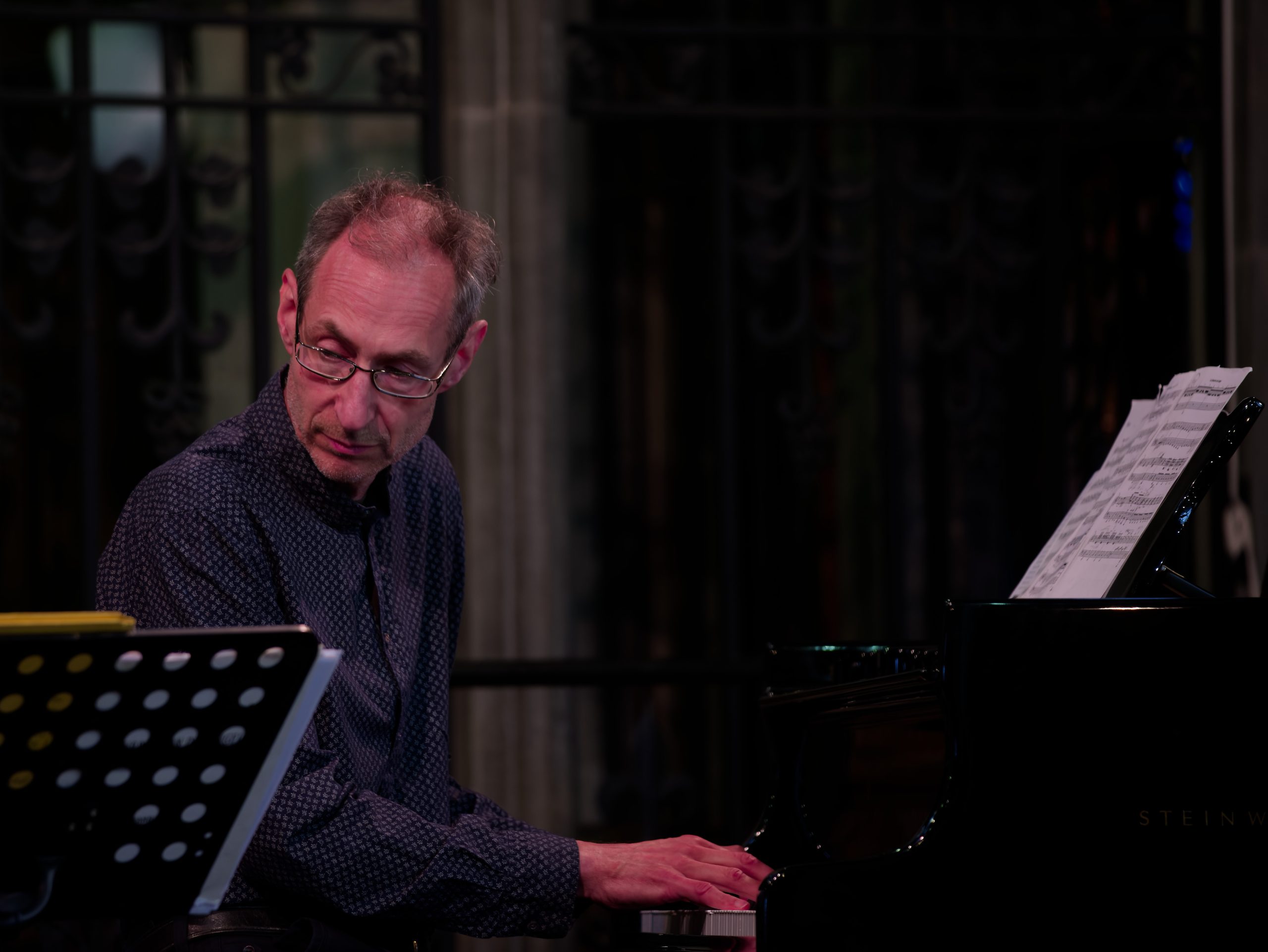
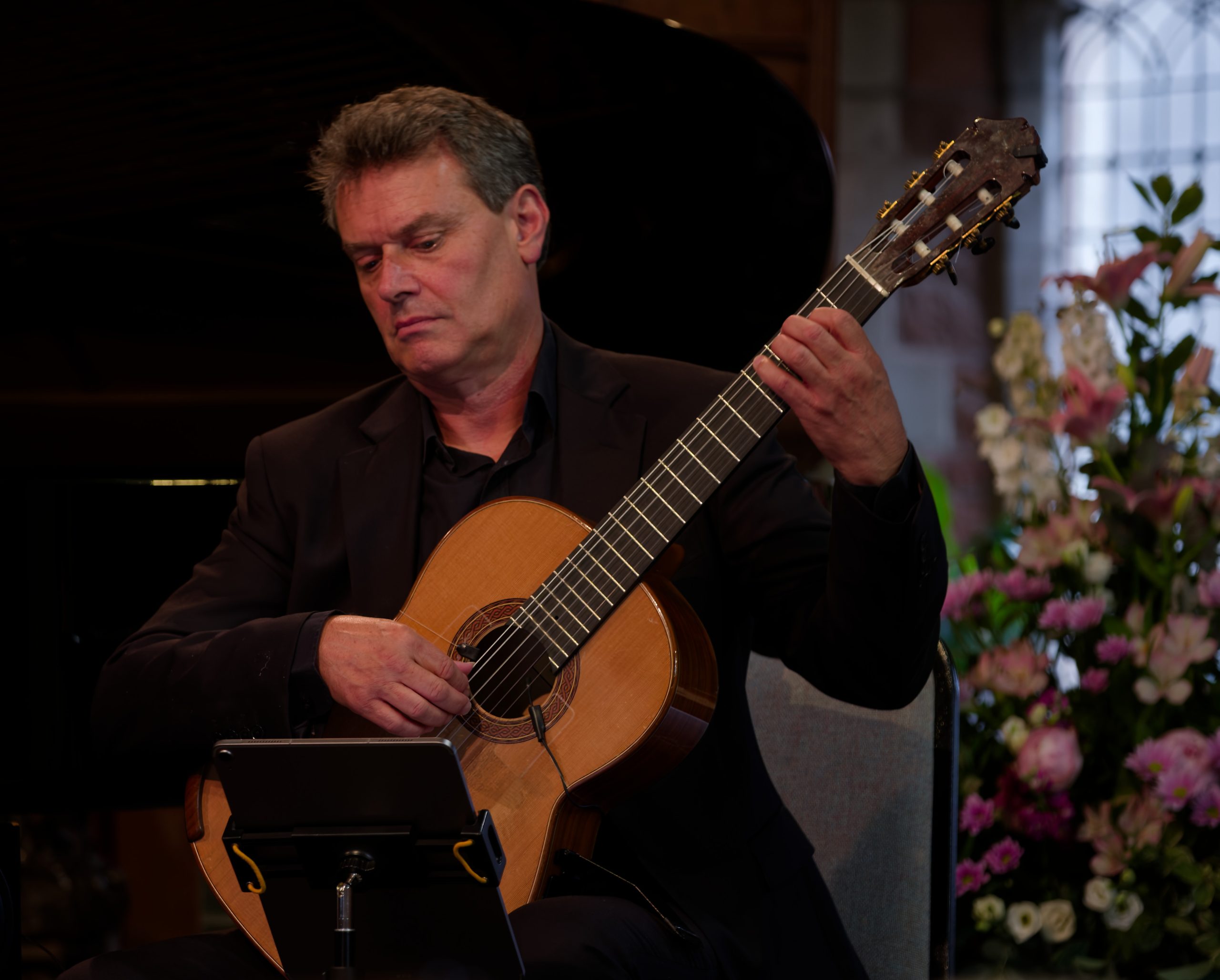
Our third evening brought the London Tango Quintet to the festival for the first time. David Juritz, violin, Craig Ogden, guitar, Miloš Milivojević, button accordion, David Gordon, piano, and Richard Pryce, double bass, entertained our audience with tango-based works from a wide variety of composers including, of course, Astor Piazzolla, “The world’s foremost composer of tango music”. Other composers included Django Reinhardt, Osvaldo Pugliese, Feliciano Brunelli and many others. All the players are fantastic performers in their own right but the terrific cohesion between the members of the band makes for a brilliant performance.
The opening number, Piazzolla’s La Muerte del Angel, featured the melancholy of the accordion of Milivojević and the violin of David Juritz.
Pianist David Gordon contributed an excellent composition, bebop Tango, and his piano playing was superb. The subtlety of his touch and phrasing were remarkable.
Django Reinhardt’s well known Nuages gave guitarist Craig Ogden a solo opportunity. He really created a Django vibe yet put his own interpretation on this beautiful composition. No wonder he is in demand throughout the world!
Richard Pryce, the bass player was a tower of strength throughout the programme whether playing pizzicato or bowed, his instrument had a glorious rich tone. Richard played a solo on Contrabayissimo which Piazzolla composed for his bass player.
The penultimate number by Brunelleschi called Illusion de mi Vida was unusual in being the only number which was a waltz. This was a superb concert; the musicians were clearly loving every moment – as did the audience.
CPM
Review of Lizzie Ball & Miloš Milivojević – Sat 20 June
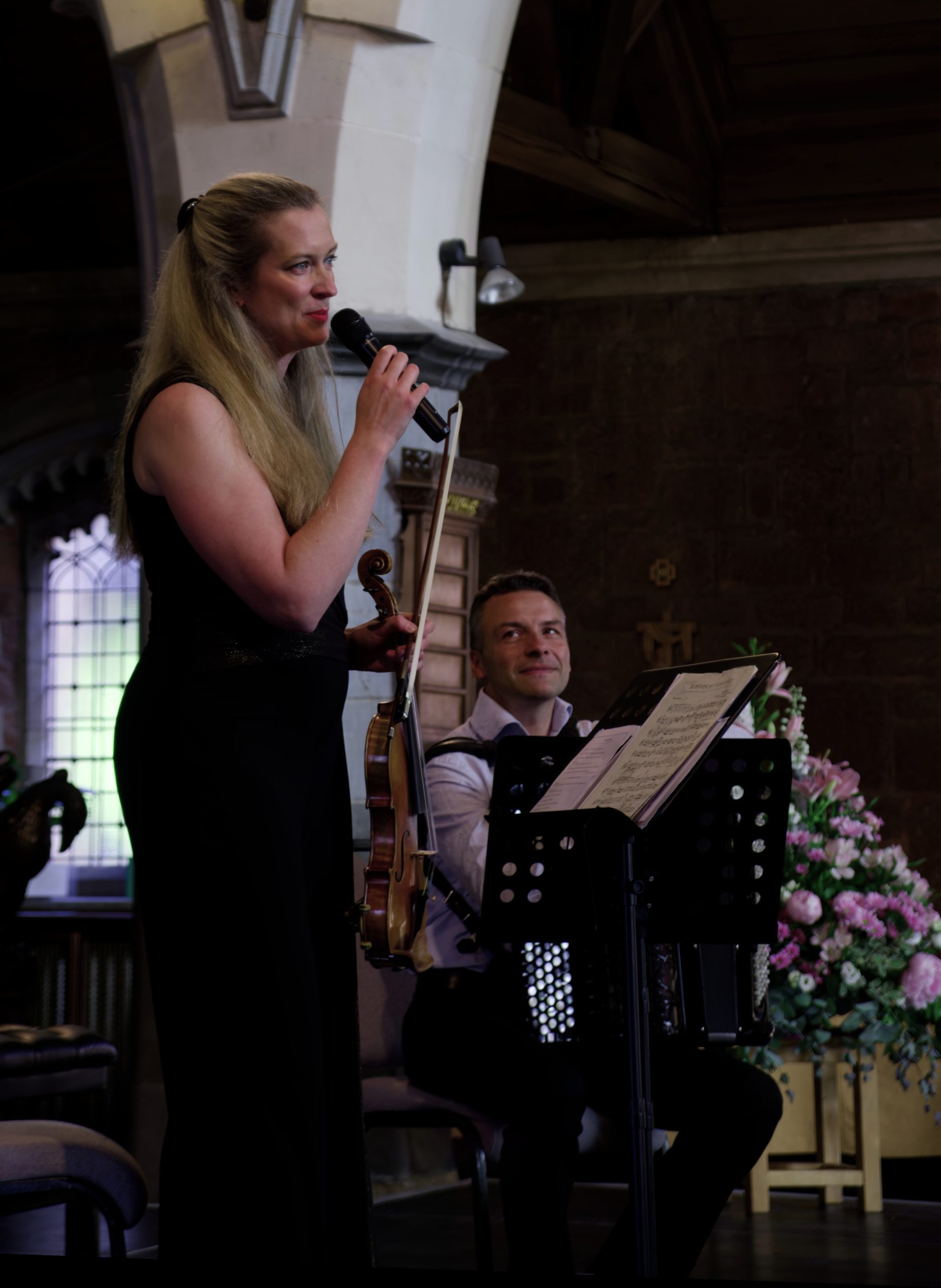
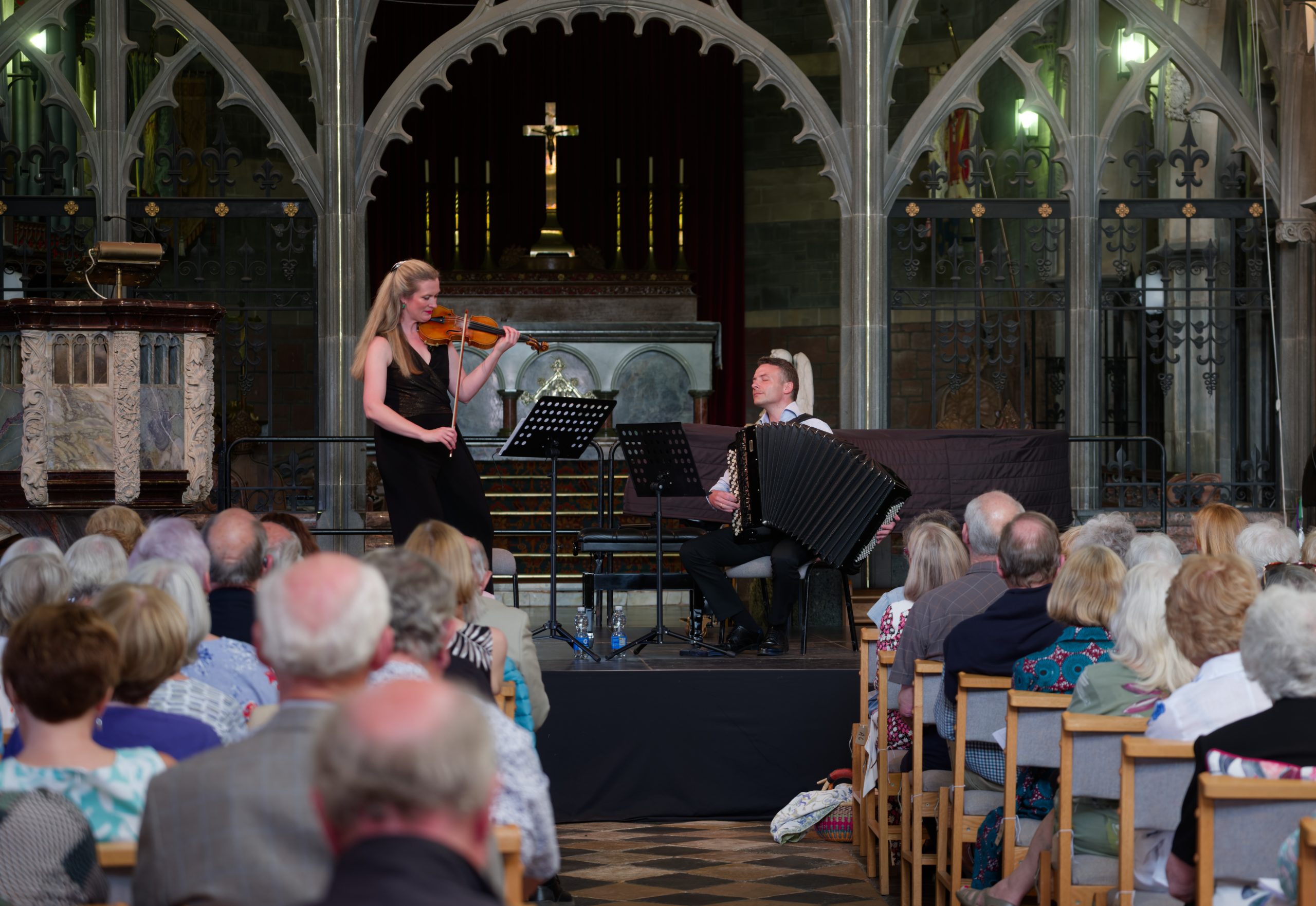
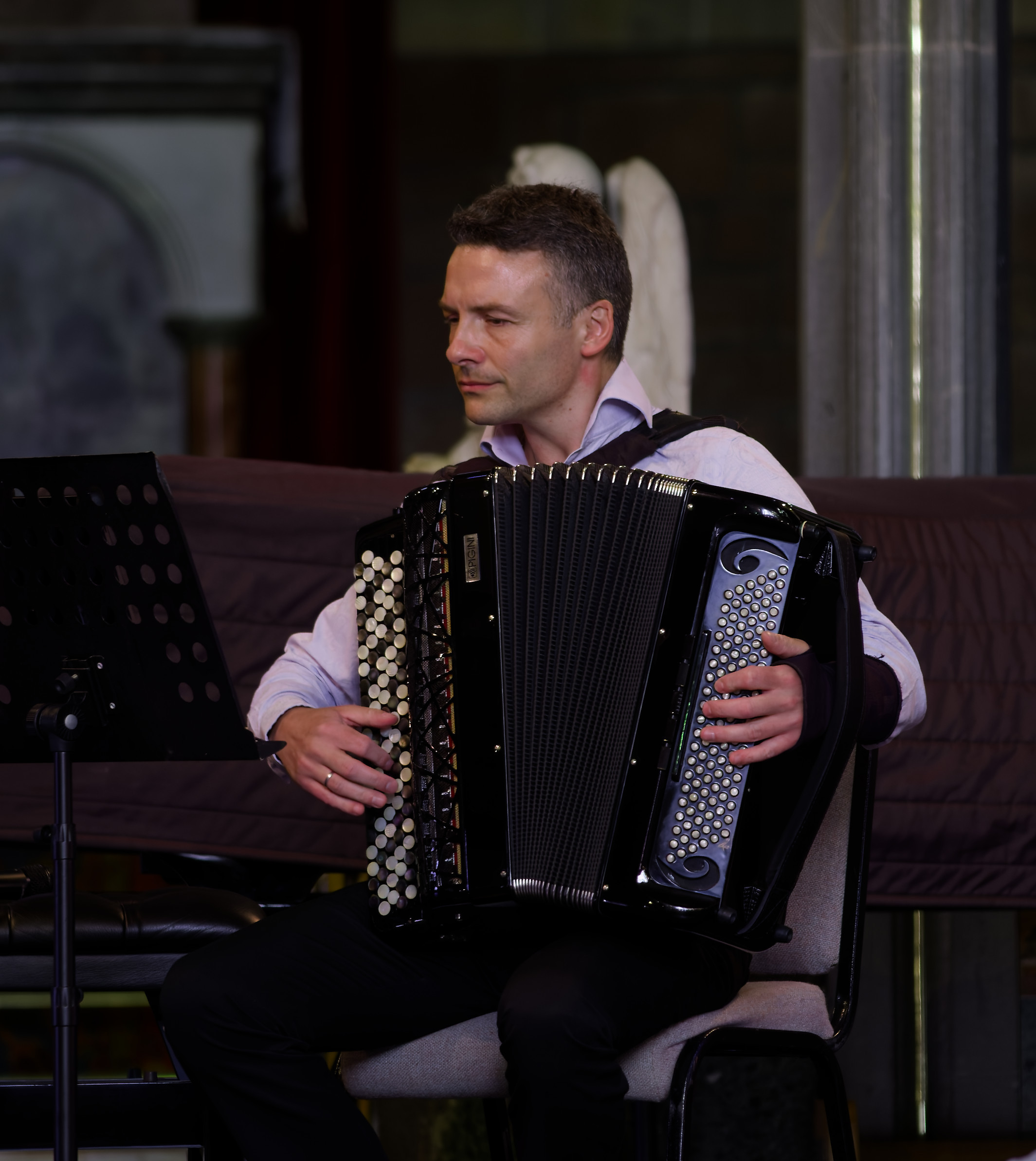
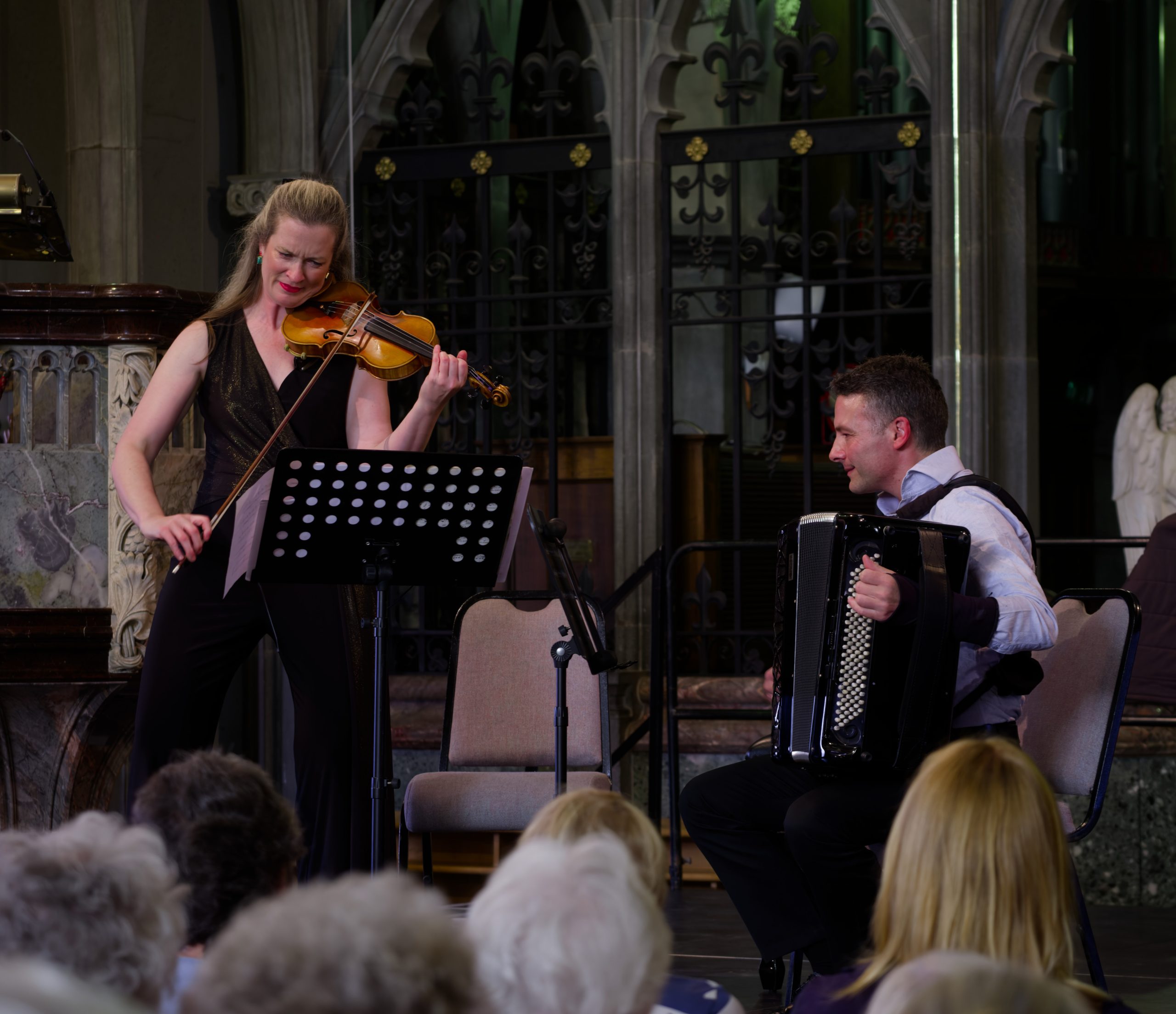
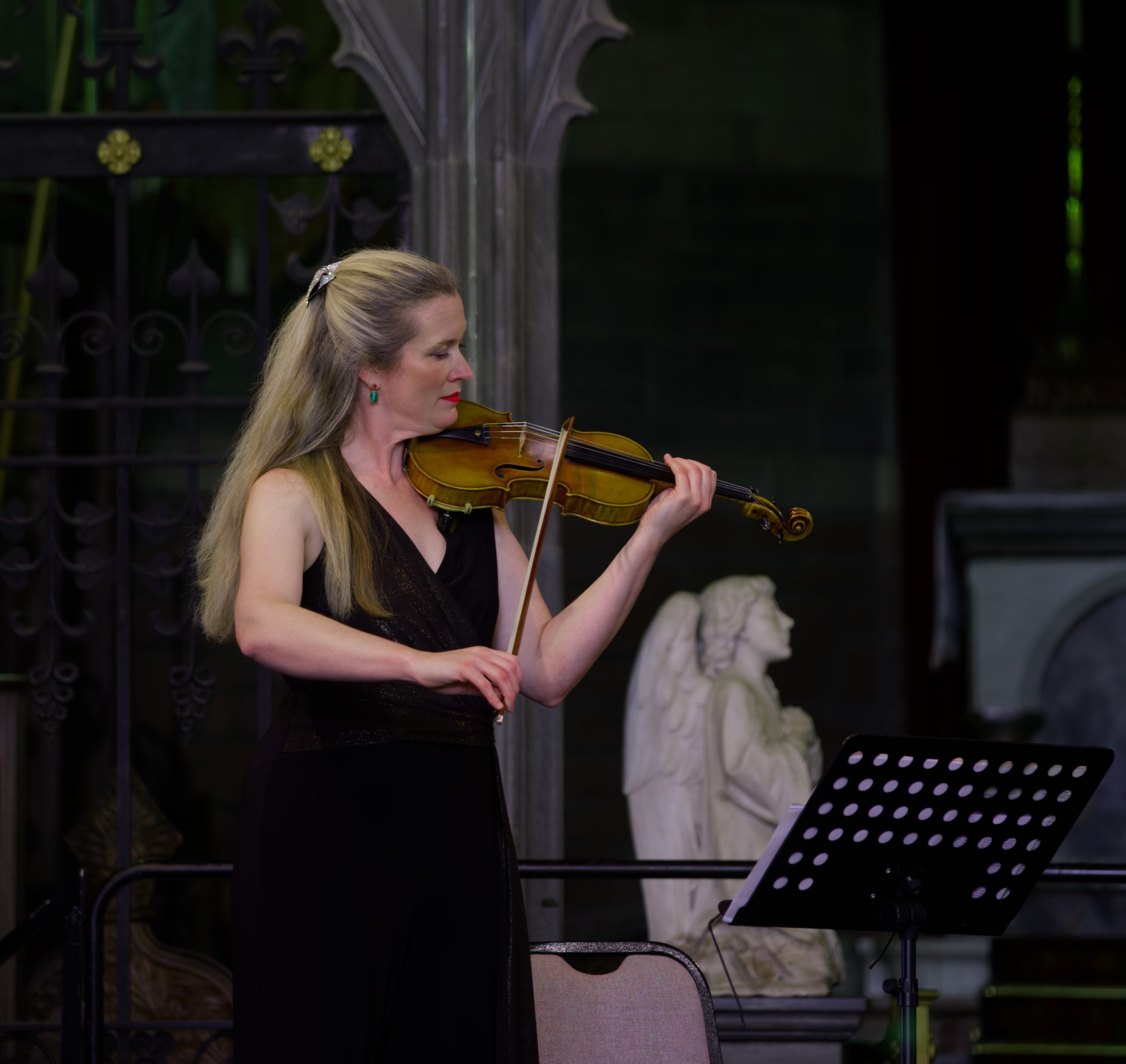
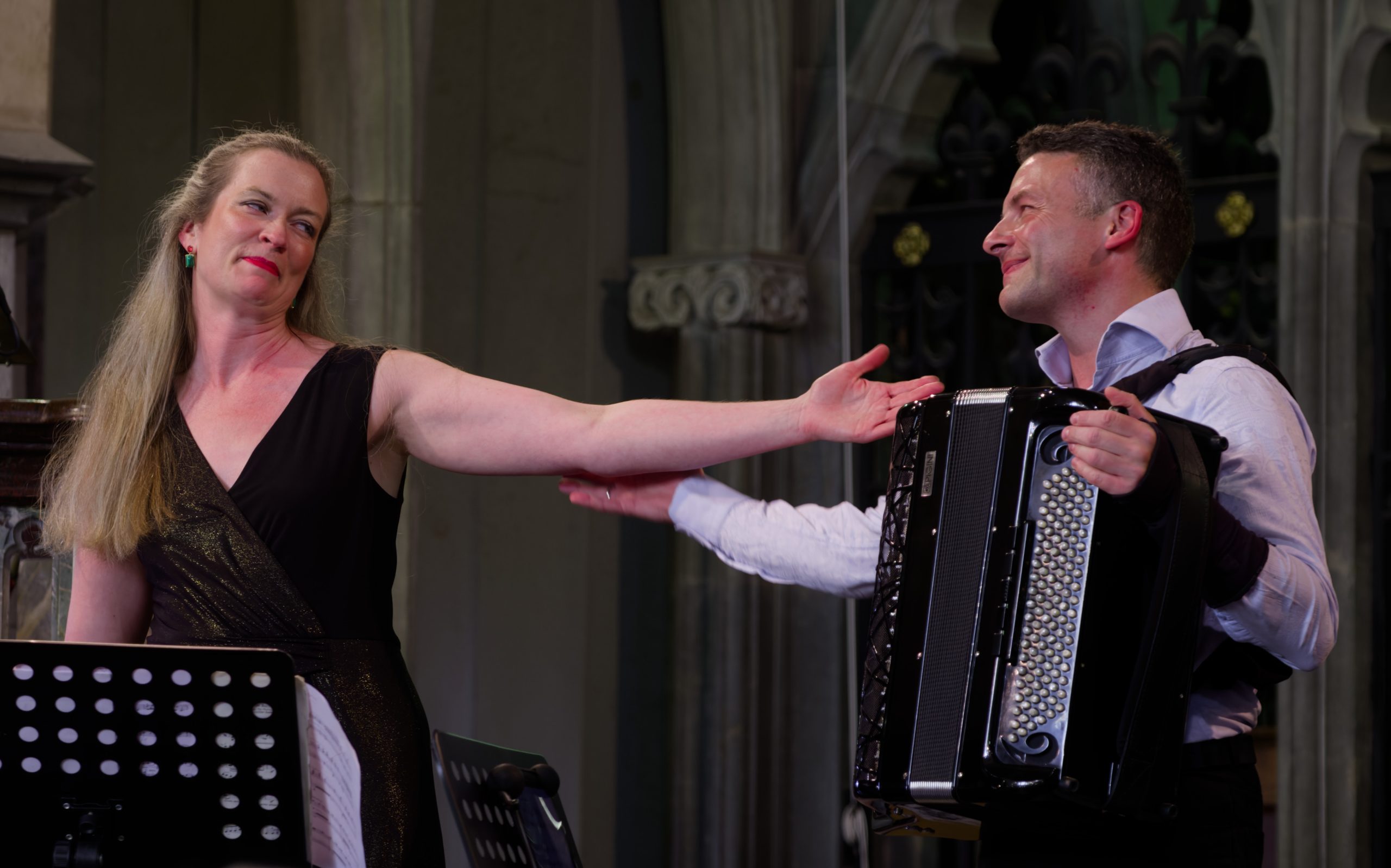
After three stunning evening concerts, the Shaldon Festival-goers were expecting a grand finale, where sparks would fly. They were not disappointed. Festival favourite, Lizzie Ball, making a welcome return to Shaldon, partnering this time with Serbian accordionist maestro, Miloš Milivojević,served up a fascinating menu of wonderful music to bring the 2026 season to a close.
Lizzie began the evening with a personal greeting. Her connection with the audience was established immediately, her charm showing warmly. We were embarking on a kaleidoscope, she said, travelling round the world together. Her partner on stage, Miloš Milivojević, had played the previous evening in the London Tango Quintet, so many in the audience were familiar with him, and his remarkable instrument.
The evening started with six short Romanian Folk Dances by the Hungarian composer Béla Bartók. The eerie harmonies and haunting tunes drew everyone in, with harmonic overtones ringing out on the violin as the button accordion provided a platform for the melodies, adding its own tunes as well.
Next was a beautiful lullaby: ‘Nana,’ a Spanish song by Manuel de Falla. The violin was hypnotic while the accordion provided a gentle ‘snoring’ baseline combined with a subtle, melodic counterpoint.
With the audience completely engaged, the performers turned to a bigger picture: Aaron Copland’s classic, ‘El Salón México’, a piece for a full orchestra, arranged by James Pearson for this duo. Lizzie Ball gave us a fascinating insight into the composer’s life and experiences. The original piece famously contains luxurious string passages; the accordion was able to mimic these admirably, leaving the violin to present the exciting top line with vivacity.
For the next piece, Milivojević gave us ‘Asturias’ by Isaac Albéniz. Before playing he explained the workings of his button accordion, an instrument most of the audience knew very little about. It was fascinating. The piece contains some lightning-quick versions of Bach cantatas – surely faster than a manual organ keyboard could manage – interspersed with slow, reflective passages in the lower registers of the instrument. It was another captivating number.
The first half closed with two well known pieces from Igor Stravinsky: the Introduction from ‘Suite Italienne’ (Pulcinella)’ and the Finale from the ‘Firebird Suite,’ arranged by the performers themselves. The first was delightfully upbeat, Ball’s expert agility coming its own in a lyrical mode. The Firebird is normally reliant on massive strings sections; once again the accordion obliged with a remarkably comprehensive support for the strong, repetitive themes of the violin, including the all-important build to the finish.
The second half started with another solo from Milivojević: the ‘Don Rhapsody No.2’ (Second Movement) by the Russian composer, Semenov, himself a button accordion virtuoso. This was an extraordinary mix of strident, modernist statements, with more lightning finger work on the right hand and delicate counterpoint on the left.
At this point, things began to turn magical. Ball explained the background to ‘La Vie En Rose’ Édith Piaf’s famous song, written by the singer with composer Louis Guglielmi. She took us back to mid-century Paris, weaving intriguing scenarios, before playing the piece. Half-way through, she lowered the instrument and launched into the song, with her full, beautifully sonorous, voice, revelling in the French lyrics. The audience was spellbound.
The magic continued. Aaron Copland’s ‘Hoe-down Medley’- the finale of his 1942 ballet Rodeo, began with Ball singing ‘Down to the River to Pray’ the traditional American anthem hymn a cappella to set the mood. For the dancing music the audience clapped along boisterously, the violinist controlling volume and tempo purely with her facial expressions.
With everyone revved everyone up by the hoe down, the tango arrived, with Piazzolla’s ‘Ave Maria’ – a lyrical beauty for the violin to explore. There followed the slightly gentler, but no less edgy, ‘habanera:’ Ravel’s song without words: ‘Pièce en forme de Habanera.’ Once again there was a delicate, dynamic interplay between the accordion and the violin.
The programme came to a close with two up-tempo pieces: the traditional Irish tune, ‘Toss the Feathers’ (again with much audience participation) and then the always welcome sparkle of ‘Czardas’ by Vittorio Monti, including some humourous theatricals by Ball.
There was, of course, a standing ovation and the pair returned to encore with ‘Veselo oro’ (‘Cheerful Circle Dance’), a delightful Serbian traditional song.
To most, if not all, the audience, the combination of sounds that Lizzie and Miloš presented was a new experience. It was a complete success and the Festival was rounded off in superb style by two extraordinary musicians.
Richard Lamming